LEHMAN SEPTEMBER

There are many warning signs of impending collapse this year, just as there were in the summer of 2008...

Rewind to the summer of 2008: In July of 2008, oil hit an all time high of $150/bbl on tensions with Iran. Bond yields were surging. A critical (presidential) election was looming. The Fed had switched from an easing bias earlier in the year to a hawkish bias due to inflation concerns. Subprime was already imploding banks left and right - New Century, Countrywide, Bear Stearns, IndyMac had all collapsed...Then in mid-September along came the Lehman bankruptcy, the straw that broke the camel's back. As I wrote in my prior blog post, risks accumulate until they reach the Minsky Moment. We also later learned that the economy had been in recession since the end of 2007, but the Fed was totally clueless. By the time they cut rates all the way down to 0% stocks lost -55%. QE was deployed at maximum level the whole time, but it did not stop mass deleveraging.
Fast forward to now: Oil is surging due to the war with Iran. Bond yields are sky-rocketing. The Fed has switched from an easing bias to a hawkish bias due to inflation. A critical mid-term election is looming. The private credit bubble is already imploding.
Back in 2025, Trump slapped tariffs on every country in the world and he used that money to give a tax cut to the wealthy. In early 2026, the Supreme Court nullified Trump's tariffs, but corporations kept prices inflated and reaped a windfall profit. Then the government started paying refunds to corporations, using taxpayer money. Meanwhile, the tax cut remained in effect. As a consequence, the deficit exploded, inflation surged, and bond yields have reached a 20 year high due to the combined effect of record government borrowing and record AI bond issuance. All of that disastrous economic policy has put extreme pressure on global credit markets.
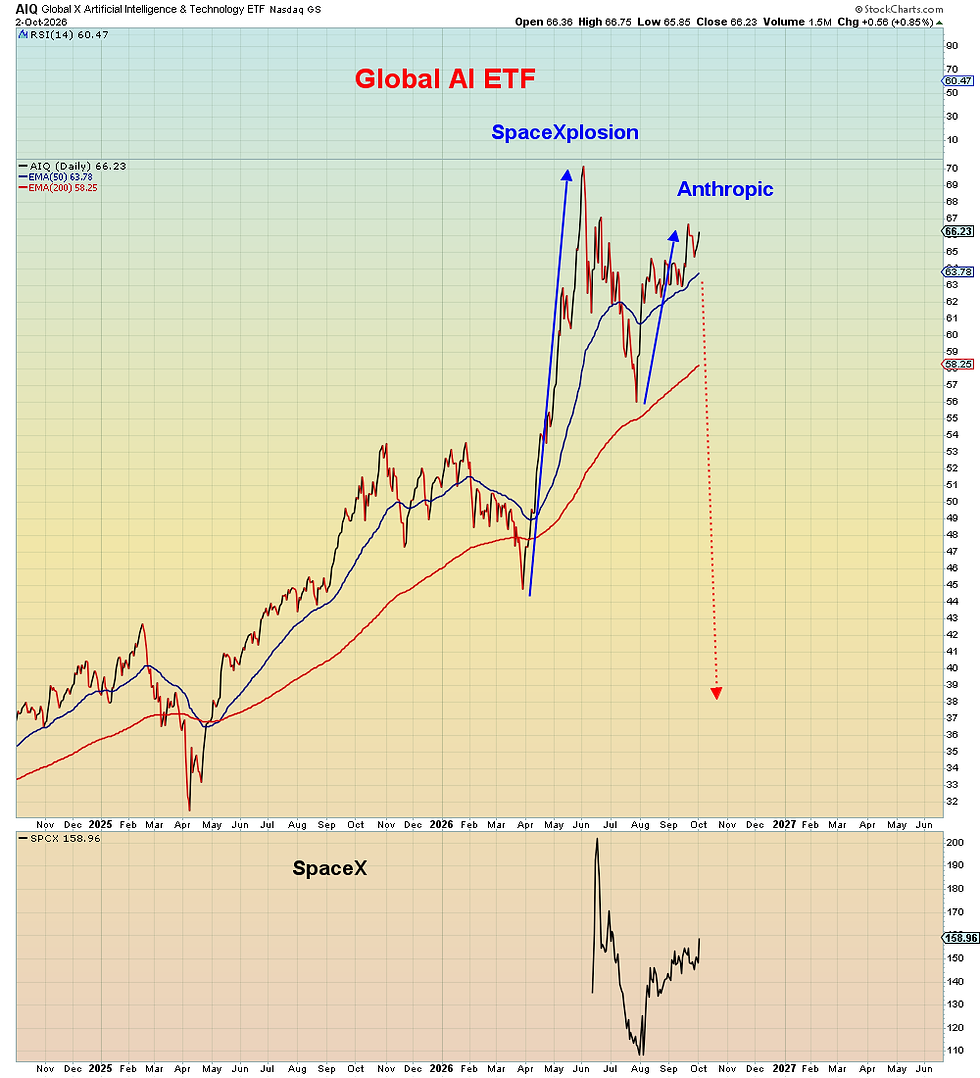
Among the differences between now and 2008 is that now the largest Tech bubble in history is imploding AND a Tech laden private credit/equity bubble is imploding at the same time. Tech is the new subprime. In addition, equity issuance is at an all time high - all Tech related. Now the over-valued housing market will join the downside party deja vu of 2008. However, the BIGGEST difference is that now there is a total imbecile who remains lodged in the White House and the next presidential election is more than two years away. In 2008 Bush left the White House in absolute ignominy, at the end of his shambolic eight year term. This is year six for Trump.
Still all of that KNOWN risk has been completely ignored by markets. Now Trump just put a massive new 50% tariff on America's largest trading partner and Canada is retaliating which means that inflation will rise ahead of the mid-terms. Trump's favorite strategy is to starve foreign countries into submission. He is doing it with Iran, with Cuba, and now with Canada. Of course the starvation of Cuba has been going on for over 60 years and Iran 47 years. So the fact that Europe and Canada did nothing all that time, is payback for turning a blind eye to U.S. starvation tactics. Not to mention the disastrous wars in Vietnam, Iraq, and Afghanistan that killed millions directly and indirectly.
Trump erroneously believes that Canada has no leverage against the United States in a trade war. Nothing could be further from the truth. The U.S. is now heavily reliant upon Canada for energy security. The nuclear option - which is often discussed north of the border - is to put a massive export tax on crude oil flowing to the U.S. and hence increase the cost of energy even more than what is taking place due to Iran. During this entire war, the U.S. has been mostly shielded from its disastrous Iran blunder due to Canada AND due to record unsustainable drawdowns from the U.S. Strategic Petroleum Reserve. Back in late July, Canadian PM Carney rejected the idea of using oil as a retaliation mechanism, but he left the option on the table:
"[Carney] also said “all options” are on the table for Canada’s response if the White House goes ahead with more levies, a comment that appeared to open the door to retaliatory measures"
The over-riding belief in markets is that the U.S. successfully borrowed its way out of a debt crisis, because the Fed has bailed out markets over and over again since the Global Financial Crisis. We have now reached the point at which risk is no longer of any concern.
But don't take my word for it, that's exactly what BofA said this week:

"Quantitative easing has been the genesis of the current bull market and the "too big to fail" conviction on Wall Street, and that extraordinary monetary stimulus over the past 20 years has produced extraordinary asset gains"
But should that fail and Bessent can’t pull 30-year yields below 5%, they said, it would trigger a dollar slump and a shift toward short risk, short leverage in areas like AI hyperscalers and private credit, and short cyclicals such as financials heading into the midterms"
The BofA Bull & Bear Indicator climbed to 9.5 from 9.3, deep in "sell" territory, on stronger global stock breadth and bullish positioning in the S&P 500"